Ausstellung


"Es gibt Architekten der Fülle und solche der Leere, aber es gibt - und vielleicht vor allem - auch jene an der Schnittstelle zwischen Materie und deren Fehlen; jene, die sich weniger mit dem Formen des Volumens befassen als vielmehr damit, dieses zu informieren. Zu ihnen gehört Cuno Brullmann.“ Paul Virilio
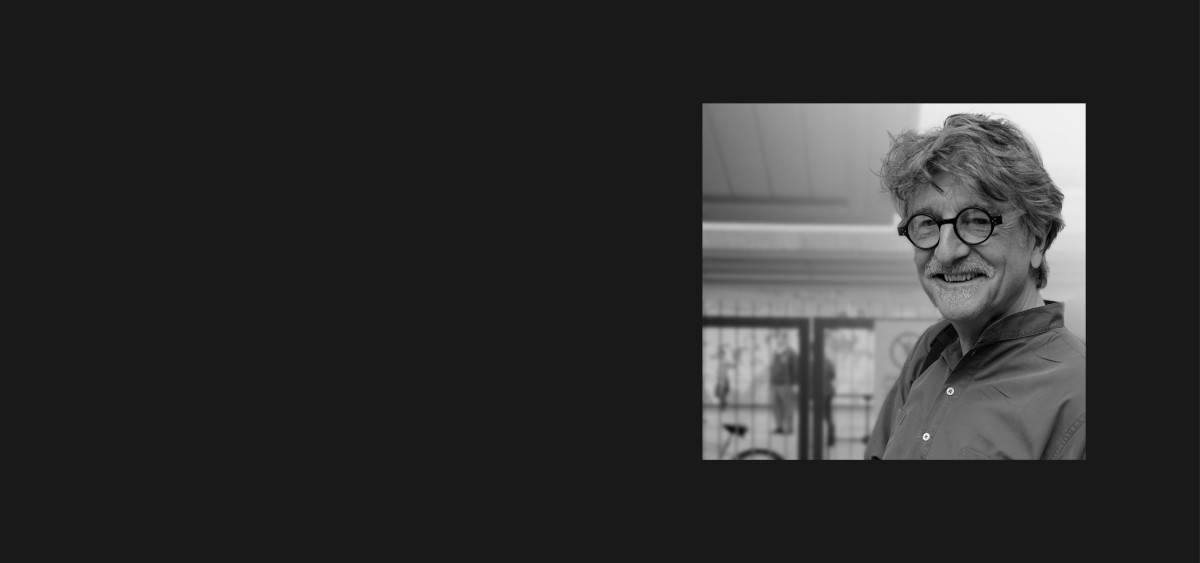
Univ. Prof. Cuno Brullmann (1945–2026): In Memoriam
With great gratitude and deep appreciation, we bid farewell to Cuno Brullmann—architect, teacher, visionary, and a defining figure of the Faculty of Architecture and Planning at TU Wien. His passing fills us with sorrow, yet also with gratitude for the time we shared and for the lasting legacy he leaves behind.
Cuno Brullmann was born in 1945 in Kreuzlingen on Lake Constance. After completing his secondary education in French-speaking Switzerland, he studied architecture at ETH Zurich. Early travels to Japan and the United States profoundly shaped his thinking—particularly the architectural principles of transparency, adaptability, and modular construction. From then on, a sketchbook accompanied him at all times, reflecting his tireless observation and design practice.
After working with Ove Arup in London and contributing to the Centre Pompidou in Paris, he continued his career in Genoa and later in Paris, where he founded his own office and served as professor at the École Spéciale d’Architecture from 1980 to 1994. There, he developed innovative teaching approaches and realized projects such as the modular exhibition system Canva.
From 1995 to 2015, Cuno Brullmann was professor at TU Wien and Head of the Department for Housing and Design. With passion and dedication, he shaped generations of students. For him, teaching meant understanding the interplay of thinking, technology, and construction. He viewed creativity not as coincidence, but as the result of knowledge, precision, and analysis.
Alongside his teaching, he realized numerous projects across Europe, including housing developments, infrastructure projects, and cultural facilities. His architecture was characterized by clarity, structural thinking, and technical precision.
With the introduction of the ArchDiploma, he created a platform for exchange that continues to this day. His influence remains visible—in buildings, in ideas, and above all in the people who learned from him.
With his passing, we lose an extraordinary architect, a passionate teacher, and an inspiring human being. We thank him for his ideas, his inspiration, and his humanity. Cuno Brullmann will live on in our “School,” as he called TU Wien, and in our memories.